AgenticEcosystem
We build developer infrastructure for the age of coding agents.
- domain
- Developer tools
- approach
- Local-first
- code
- Open source
The craft is shifting to orchestration.
Good tools must make the work of agents readable, comparable, local and inspectable, not just faster. They must also lighten the mental load on developers and the load on the machine.
Coding becomes orchestrating
Less code written line by line. The work moves toward supervising agents, making technical tradeoffs and understanding the system as a whole.
The terminal remains the foundation
Agents work in long command-line sessions. A reliable terminal must replay them, keep a very long history and hold sessions over time.
Local must stay open
Work is leaving the classic editor. New tools must run on Linux, macOS and Windows, without depending on a cloud or a closed runtime.
Open source provides proof
A tool that changes how people work must be open to inspection, replay and public discussion. Opening the code is the only way to prove it.
StriveX projects
Paneflow is the main product. Each of the other projects solves one specific problem, and its code is public.
- , opens in a new tab
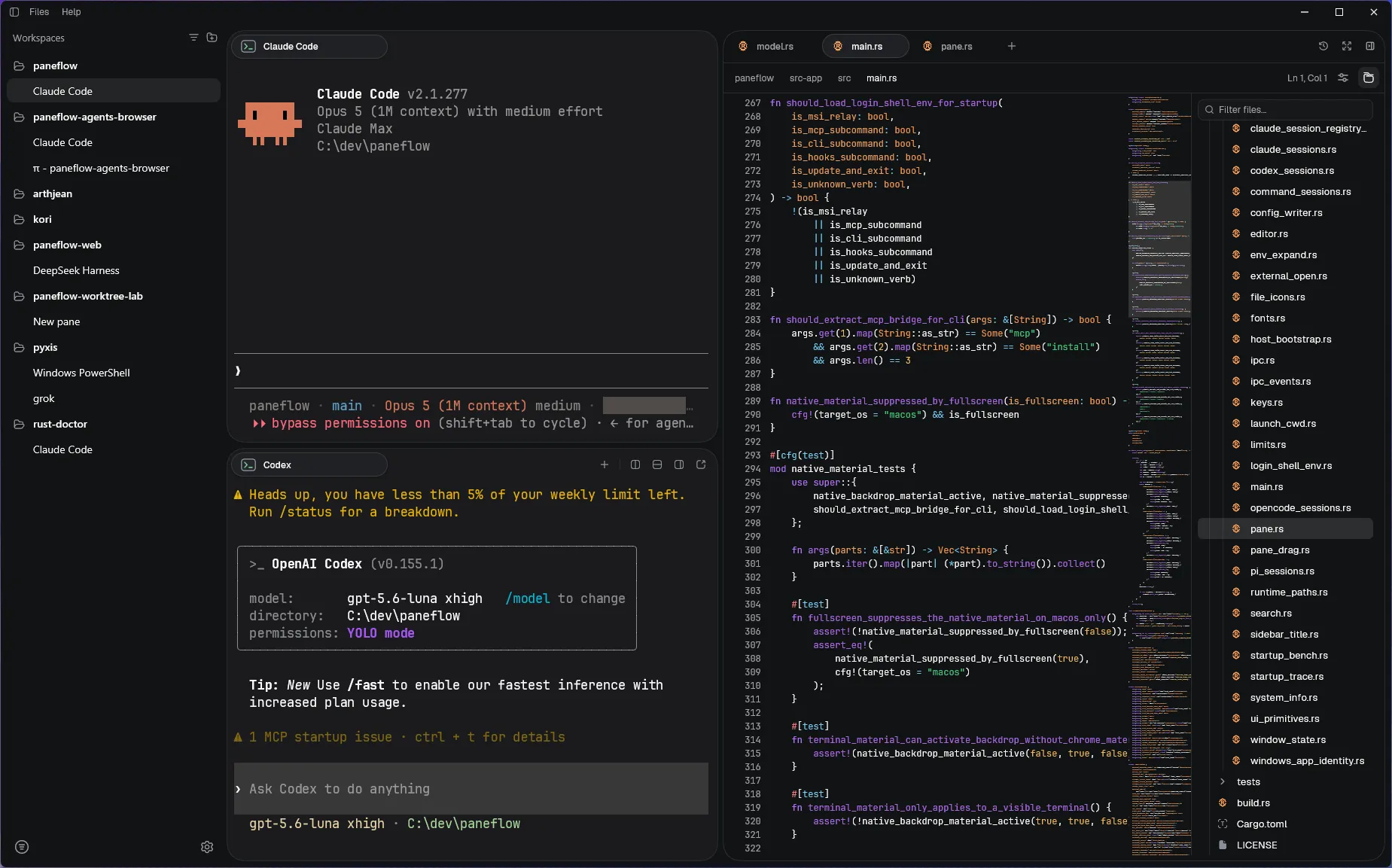
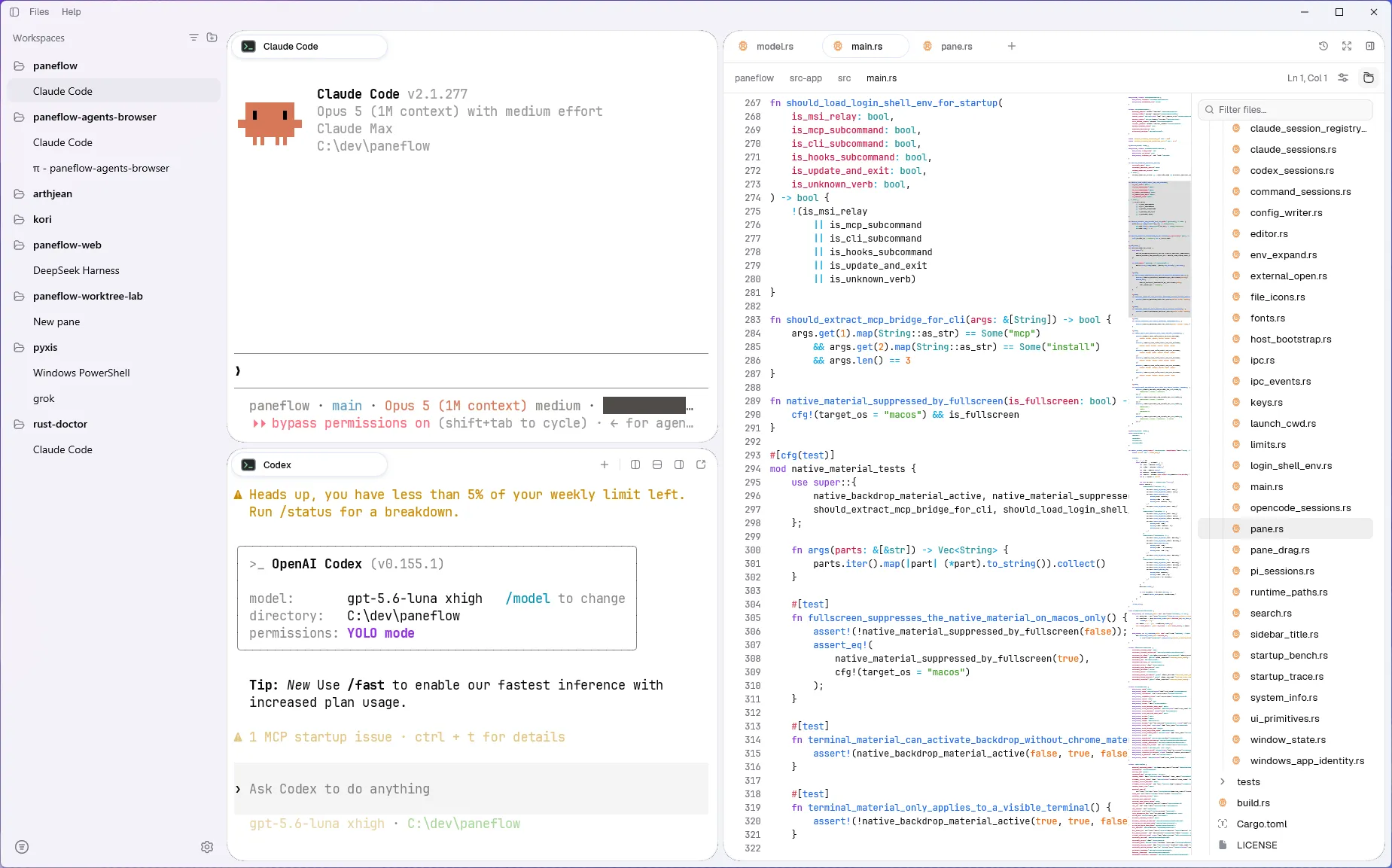
Paneflow
A native Rust and GPUI workspace for running several coding agents side by side. Available on Linux, macOS and Windows.
- , opens in a new tab
Rust Doctor
Scans a Cargo workspace against 126 rules, from security to dependencies, and returns a score out of 100. Everything runs locally.
- , opens in a new tab
Pyxis
A native coding agent for the terminal, independent of the model behind it. It reads, searches, edits and runs commands until the task is done.
- , opens in a new tab
Mistral Vibe RS
An independent rewrite of Mistral Vibe in Rust, with no Python runtime. First goal: full parity with the original.
- , opens in a new tab
Distill
A local engine that condenses the tool output sent to an agent within a fixed context budget. The original stays stored and recoverable.
- , opens in a new tab
Kori
Monitors and controls NZXT hardware on Linux: temperatures, pump, fans, RGB and the Kraken screen. No account, no cloud. Unofficial project.
- , opens in a new tab
OpenbookLM
The open-source core of OpenbookLM: a Rust RAG backend that answers questions about your documents and cites every source.


Trust is built in public
Tested in real work
Every tool is used first in real development sessions. Its limits, traces and feedback stay public.
Explicit hypotheses
Every project starts from a clear, testable hypothesis about how developers will use agents.
Proof by code
The tools run, sessions can be replayed and the code is inspectable. The rest is secondary.